Gut Health Supplement for Horses: Feeding Hindgut Support, the Practical Basics
Quick Answer: How to Feed It
Feed hindgut support at the label rate for your horse's actual body weight, mixed into a small damp hard feed, once or twice daily as the product directs, and introduce it over about two weeks rather than starting at the full rate on day one. It sits behind forage, never in front of it: a horse eating too little fibre and too much starch in single large meals has a management problem that no scoop fixes. Weigh a level scoop on a kitchen scale before you trust it, because scoop volume and product density vary wildly between tubs.
- Forage first, always — the hindgut microbes live on fibre, and grams of supplement cannot stand in for kilograms of hay.
- Ramp up over two weeks — a sudden change of any kind is what the hindgut handles worst.
- Call the vet for colic signs — pawing, rolling, no droppings or off feed is an emergency, not a supplement question.
The hindgut is a fermentation vat, and forage runs it
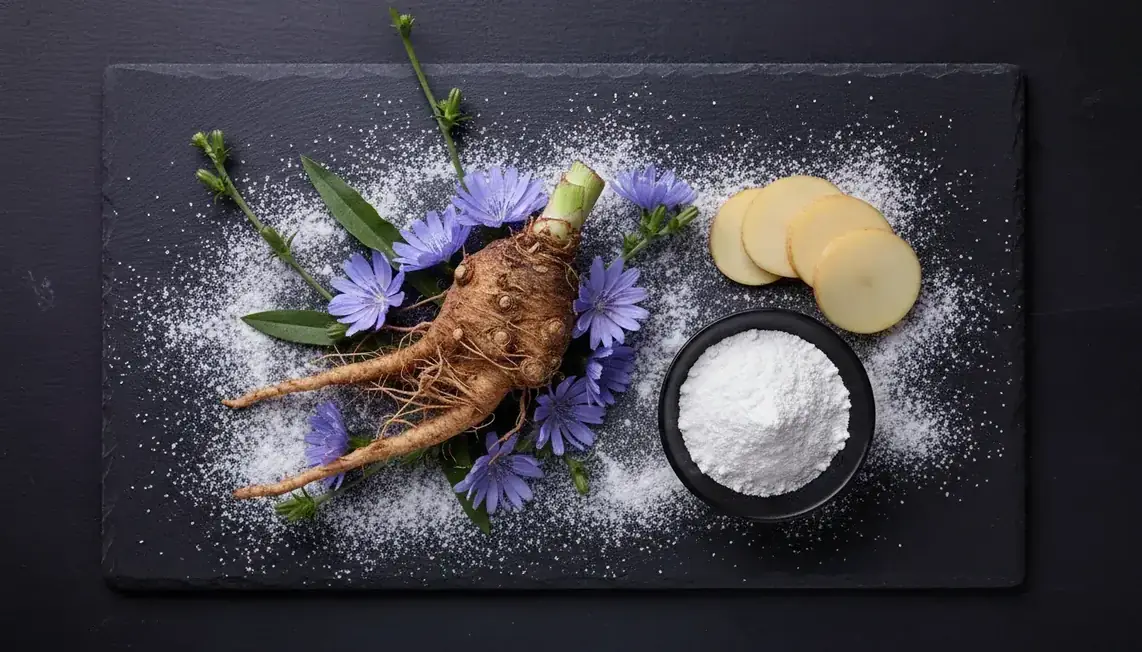
A horse is a hindgut fermenter. The small intestine handles what it can, and everything fibrous passes on to the caecum and large colon, where an enormous microbial population breaks it down and produces volatile fatty acids that the horse absorbs as a major share of its daily energy. That is not a side process. For a horse on a forage-based diet it is the main event, which is why the composition and stability of that microbial population is worth caring about at all.
Two things upset it more than anything else. The first is sudden change — a new hay batch, a move to spring grass, a feed switched overnight. The microbial population is adapted to what it has been eating, and it takes days to weeks to re-adapt. The second is starch overload: when a hard feed is large enough that undigested starch escapes the small intestine and reaches the hindgut, it ferments rapidly, pH falls, fibre-fermenting organisms suffer and the whole system destabilises. Standard feeding guidance therefore keeps concentrate meals small and frequent for exactly this reason.
Everything else in this article follows from those two facts. A supplement is being asked to help a population that is largely governed by forage supply and meal size. If those are wrong, the supplement is decoration. If they are right, a supplement may add something at the margins — and margins are worth having in a competition horse, an older horse, or one going through a genuinely disruptive period.
Dosing by body weight, and the scoop trap
Equine labels almost always express a rate per 500 kg of body weight, sometimes per 100 kg. That means the first step is knowing what your horse weighs, which is the step most people skip. A weighbridge is the gold standard; a weigh tape used consistently by the same person is a reasonable substitute for tracking change over time, even though it is less accurate in absolute terms. Eyeballing it is not a method, and the error runs in the direction of underfeeding a big horse and overfeeding a small one.
The scoop is the second trap, and a more common one. The scoop in the tub is a volume measure for a product with a specific density. A different product at the same volume can weigh half again as much or half as much, so a scoop is meaningful only for the tub it came in. Put a level scoop on a kitchen scale once, write the gram weight on the lid in marker, and you have removed an entire class of error for the life of the tub. Do it again when you change brands.
Many products also distinguish a loading rate from a maintenance rate — a higher amount for the first week or two, then a lower ongoing amount. That is a legitimate design in some ingredient groups and pure marketing in others; the way to tell is whether the label explains the reason. Either way, do not stay on a loading rate indefinitely because it feels more thorough. You are paying twice for something the label says you do not need.
Reading this for yourself, not the yard?
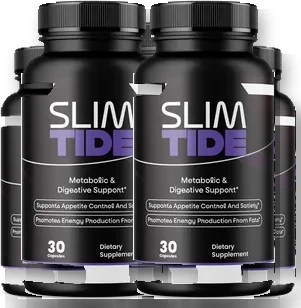
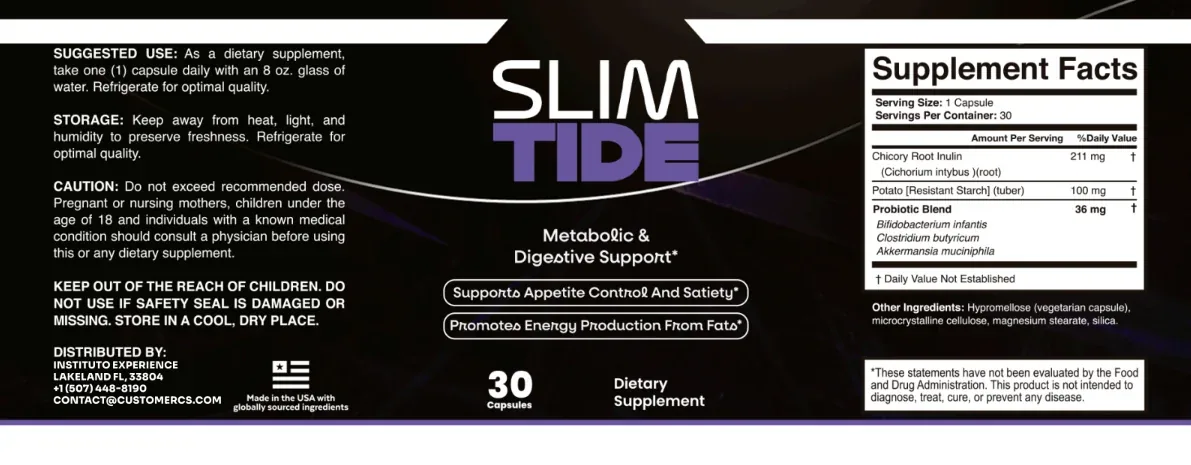
SlimTide is an adults-only daily capsule that pairs chicory root inulin and potato resistant starch with three live strains. If your search actually started with where to buy weight loss supplements and ended up here, the official store carries the current panel, the guarantee terms and the genuine product.
See the official storeIntroducing it slowly, over about two weeks
The single most useful habit in equine feeding is also the least glamorous: change things gradually. The hindgut microbial population adapts to what arrives, and it adapts at its own pace. Starting a new product at the full rate on day one is a change, and it can produce exactly the loose droppings and gassiness that you bought the product to avoid — which then gets blamed on the product rather than on the introduction.
| Stage | Roughly how long | What to feed | What to watch |
|---|---|---|---|
| Baseline | 3–5 days before starting | Nothing new; note current droppings and appetite | You need a before, or the after means nothing |
| Introduction | Days 1–4 | About a quarter of the label rate | Whether the feed is eaten at all |
| Build | Days 5–10 | Around half, then three-quarters | Dropping consistency and gut sounds |
| Full rate | Day 10 onward | The label rate for the horse's weight | Appetite, demeanour, work tolerance |
| Fair trial | 4–6 weeks at full rate | No other changes at the same time | Whether anything has actually changed |
Damping the feed helps in two ways. It stops a fine powder being blown out of the manger or sifted to the bottom and left, and it slows a greedy eater fractionally. If your horse is suspicious of new smells, introducing over four days rather than one also gives it time to accept the change without a standoff at the door.
What a gut health supplement for horses can realistically add
This is where honesty is more useful than enthusiasm. The ingredient groups sold under the hindgut heading are not equivalent, and the published work behind them is not evenly distributed. Live yeast has the most, and is the group with recognised feed-additive status in several regulatory systems, which at least means a defined strain and a defined rate rather than a vague promise. Prebiotic fibres and yeast cell wall fractions have a smaller body of work. Bacterial probiotics have less again in horses specifically, partly because demonstrating that an organism survives the stomach and establishes in the hindgut is genuinely difficult.
None of this means the category is worthless. It means claims should be read at the level of the ingredient and the rate, not the tub. And it means that where a manufacturer will not tell you the strain or the inclusion rate, you cannot check whether the product resembles anything that has been studied.
| Ingredient group | What it is meant to do | Evidence in horses | Practical note |
|---|---|---|---|
| Live yeast (defined S. cerevisiae strain) | Support fibre-fermenting microbes and hindgut stability | The strongest of these groups | Check for a named strain and a stated live count |
| Yeast cell wall / MOS | Act as a substrate and binding surface | Moderate, and often extrapolated from other species | Not a live ingredient; do not confuse the two |
| Prebiotic fibres (FOS, inulin) | Feed existing microbes | Limited in horses at supplement rates | Grams here against kilograms of forage fibre |
| Bacterial probiotics | Introduce live organisms directly | Weaker in horses than in some species | Extra caution is advised in foals; ask a vet |
| Buffers and alkalising salts | Blunt acidity after starch meals | Mixed, and situation-dependent | Fixing meal size does more than buffering it |
| Psyllium | Support clearance of ingested sand | Mixed; used in a specific situation | A targeted tool, not daily hindgut support |
| Pectin, lecithin, amino acids | Marketed for the stomach lining | Limited, and aimed at the foregut | Different organ entirely from the hindgut |
Half the confusion in this category comes from mixing up two organs. Gastric products are aimed at the stomach and hindgut products at the caecum and colon. A tub that promises both, without saying which ingredient is doing which, is describing a market rather than a mechanism.
Timing around feeds, work and travel
Feed the supplement with a hard feed rather than on its own, so it is diluted, damp and eaten alongside something else. Where a product is split into two daily doses, splitting it across the two feeds is usually easier to sustain than trying to remember an odd extra visit. Consistency at roughly the same times each day matters more than the specific hour, because horses are creatures of routine and so are the people feeding them.
Two situations deserve planning ahead. The first is travel and competition, where the disruption — a long box journey, strange water, reduced turnout, an interrupted forage supply — is precisely the sort of change that unsettles a hindgut. If you intend to support a horse through that, start well before the lorry ramp goes up, not on the morning of. A product introduced on the day of a stressor has had no chance to be anything other than another new thing.
The second is competition rules. If your horse competes under a governing body, check the product against the prohibited substances rules and prefer feeds and supplements produced under a recognised feed assurance or naturally-occurring-prohibited-substances scheme. Herbal ingredients are the usual culprits, and a well-intentioned tub of calming herbs has ended more competition days than any hindgut question. When in doubt, ask the governing body or your vet before it goes in the manger, rather than afterwards.
Keep the tub sealed, cool and dry. Live ingredients are the first casualty of a warm, humid feed room, and the storage line on the label is not decorative.
What these products cannot do
Short, because the limits are the part most pages leave out.
- They do not diagnose, treat, cure or prevent any disease. Colic signs, persistent diarrhoea, sudden weight loss or a horse that is genuinely off colour is a veterinary call the same day.
- They do not substitute for forage. Grams against kilograms, permanently. If forage is restricted, that is the problem to solve first.
- They do not make large starch meals safe. Splitting the hard feed into smaller, more frequent portions is the intervention with the real mechanism behind it.
- They do not diagnose the cause of poor condition. Teeth, worm burden, pain, workload and simple under-feeding all present as a horse that is not thriving, and all outrank a supplement.
- They are not standardised. Two tubs described in the same words can contain entirely different ingredients at entirely different rates.
- They do not work on a fortnight's evidence. Anything you can see in three days was probably the weather, the grass or the wishful thinking.
Choosing without being sold to
Read the composition and the additive panel, not the front of the tub. Prefer products that name the yeast strain and its live count, state inclusion rates for each named ingredient rather than hiding them in a blend, and give a feeding rate tied to body weight. Check the batch number, the best-before date and the storage instruction. If a product carries a recognised feed assurance mark, that is a genuine, if modest, quality signal.
Search results for the best equine gut health supplement will hand you ranked lists, and most of those lists are ordered by commission rather than by panel quality. The same applies to the endless variations on what is the best gut health supplement for horses that circulate on forums. Comparing two composition panels side by side takes ten minutes and beats every list, because it is the only method that looks at what is actually in the bucket.
Finally, resist buying more than one thing at once. Three new tubs starting on the same Monday is three simultaneous variables and no information. Run one, at the full rate, for four to six weeks, then decide. The same discipline applies across species, and we make the equivalent argument for dogs in our piece on giving a dog a digestive supplement safely. For adults comparing human fibre doses against food, our line-by-line look at the SlimTide fibre and strain panel is the human equivalent of this exercise, and it is just as unflattering in places.
Common questions
What does a gut health supplement for horses actually do?
Most of them aim to support the microbial population in the hindgut, where fibre is fermented, either by adding live yeast, by supplying a fermentable substrate, or by buffering acidity. They are an adjunct to the diet rather than a driver of it, because the fibre in forage is what the hindgut microbes actually live on. A supplement sitting behind restricted forage and large starch meals is being asked to fix a management problem it cannot reach.
How long before you would expect to see anything?
Give any hindgut product a fair trial of about four to six weeks at the full label rate before judging it, because microbial populations shift slowly and droppings, coat and condition are slow indicators. Change one thing at a time so the trial means something, and keep a short written note of droppings, appetite and demeanour rather than relying on memory. If nothing has changed by six weeks, stop paying for it.
Can a supplement replace forage?
No. Forage is measured in kilograms per day and supplements are measured in grams, so the two are not in the same order of magnitude and never will be. Standard guidance is that a horse should receive somewhere around one and a half to two percent of its body weight daily as forage dry matter, and no scoop of anything substitutes for that. Fix the forage first, then decide whether a supplement still has a job to do.
Is a live yeast the same as a probiotic?
Not quite. Live yeast is a single-celled fungus, usually a specified strain of Saccharomyces cerevisiae, and it is the ingredient group with the most published work in horses. Bacterial probiotics are a different category with a weaker evidence base in horses, partly because surviving the stomach and establishing in the hindgut is difficult to demonstrate. Some yeast products are also sold as inactivated yeast cell wall, which is a prebiotic-style ingredient rather than a live one, so read which of the three you are buying.
References
- PubMed — published work on equine hindgut microbiota and fermentation
- PubMed — live yeast and fibre digestibility in horses
- NCCIH (NIH) — Probiotics: what you need to know
- NIH Office of Dietary Supplements — Probiotics: consumer fact sheet
- Harvard T.H. Chan School of Public Health — Fibre and fermentation in the gut
General information, not veterinary or medical advice. These statements have not been evaluated by the Food and Drug Administration, and no dietary supplement is intended to diagnose, treat, cure or prevent any disease. Speak to your veterinarian or a registered equine nutritionist before changing a horse's feed. SlimTide is an adult human product and is not intended for animals.
See the official SlimTide store
Affiliate link. Slimtidea Fibre Journal earns a commission on purchases made through it, at no extra cost to you. We are not the manufacturer.