Gut Health Supplements for Kids: Formats They Will Actually Take
Quick Answer: Which Format Wins
Unflavoured powder stirred into a food the child already eats is the format with the highest long-run acceptance, because it takes the supplement out of the negotiation entirely. Drops suit infants and toddlers, chewable tablets suit school-age children who chew reliably, and capsules are unrealistic for most children before roughly age eight. Gummies are the easiest sell and the weakest format on dose accuracy, sugar content and shelf stability.
- Powder into familiar food — yoghurt, porridge, apple sauce. Nothing new appears on the plate.
- Never split an adult product — half an adult dose is not a child's dose, and most adult labels exclude under-18s outright.
- Ask the paediatrician first — especially for children under two, or on any medication.

Why format decides everything with children
Adults will swallow something unpleasant because they have decided it is good for them. Children will not, and no amount of explanation changes that. So the question that matters is not which product has the most impressive ingredient panel. It is which product will still be going into the child on day twenty-eight, when the novelty has gone and nobody has the energy for a battle before school.
That reframing has a practical consequence. A modest, well-tolerated product taken daily beats an excellent product taken twice and then abandoned in a cupboard. Any daily supplement, for anyone, only does whatever it does through consistency. For a child, consistency is a logistics problem before it is a biochemistry problem, and the format is the logistics.
There is a second, less obvious reason format matters here. Different formats carry genuinely different amounts of what is on the front of the jar. A gummy has to survive heat during manufacture and months on a shelf. A capsule does not. Two products can both say the same thing on the label and deliver quite different amounts by the time the last one is eaten. Choosing a format is therefore partly a dosing decision, not just a palatability one.
The formats, compared honestly
| Format | Realistic age | Acceptance | Dose reliability | Main drawback |
|---|---|---|---|---|
| Unflavoured powder into food | 6 months upward, with guidance | High once hidden | Good, if the whole portion is eaten | A refused bowl means a lost dose |
| Oil or liquid drops | Infant to toddler | High in infants, falls with age | Good, dropper is precise | Short shelf life once opened |
| Chewable tablet | Roughly 3–4 years upward | Moderate to high | Good | Chalky texture is a common refusal |
| Gummy | Roughly 3 years upward | Very high | Weakest of the formats | Sugar, and being treated as sweets |
| Stick pack into a drink | School age upward | Moderate | Good if fully dissolved | Grittiness in cold liquid |
| Capsule | Roughly 8 years upward | Low before that age | Best | Most children cannot swallow one |
| Fermented food (yoghurt, kefir) | Any age past weaning | High | Not standardised at all | Live counts vary hugely by product |
The right row for your household is usually the one where the acceptance column is high and the drawback is one you can live with. Parents searching for the best gut health supplement for kids often start from the ingredient list and work forward. Starting from the format column and working backward tends to produce a product that actually gets used.
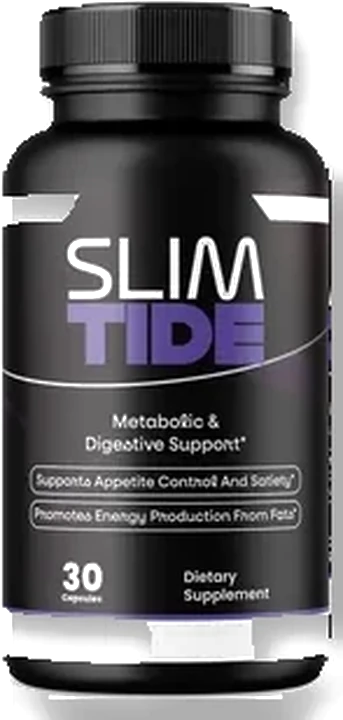
Looking for the adult version instead?
SlimTide is a once-daily capsule for adults — its own caution panel excludes children under 18 — pairing chicory root inulin and potato resistant starch with three live strains. If that is what you were actually shopping for, the official store has the current SlimTide price and the full panel.
See the official storeDoses are not scaled-down adult doses
This is the mistake worth naming early, because it is common and it is entirely understandable. If an adult takes one capsule, surely a child takes half? No — and not because half is dangerous, but because the reasoning does not hold. Paediatric dosing is not a body-weight fraction of an adult dose for most supplement ingredients. It is set separately, by age band, using whatever evidence exists in that age band. For many ingredients there is no such evidence, which is why paediatric products tend to be simpler than adult ones rather than smaller versions of them.
There is also the composition problem. An adult digestive formula might contain botanical extracts, a fibre load calibrated to an adult colon, and strains chosen for adult outcomes. Splitting it in half gives a child half of every one of those decisions, all of which were made about somebody else. And practically, capsules are not designed to be opened; the contents can taste appalling, which returns you to the acceptance problem you were trying to solve.
Fibre in particular deserves care. Children need considerably less than adults, and requirements climb with age rather than sitting at a single number. Introducing a concentrated fibre powder at an adult dose into a small digestive system is a fast route to wind, cramping and a child who now associates that bowl of porridge with feeling awful. Start at the lowest amount the product allows, go up slowly over two or three weeks, and increase fluid alongside it.

Gut health supplements for kids: what the evidence supports
Here is where honesty is more useful than enthusiasm. Probiotics have been studied in children more than in most groups, and the picture is genuinely mixed. Specific strains at specific doses have been trialled for specific situations — antibiotic-associated digestive upset, infant colic, acute gastroenteritis recovery — and some of those trials found a benefit while others found nothing. Where results exist, they attach to the exact strain studied, not to the species and certainly not to the category. A product listing a species name with no strain code has not inherited that evidence.
For general, non-specific use in a healthy child — the “just for gut health” purchase — the evidence is weak. That does not make it harmful, and well-characterised strains are generally well tolerated. It does mean nobody should promise you an outcome, and any page that does is selling harder than the science supports. Regulators are clear that supplements are not intended to diagnose, treat, cure or prevent any disease, and that framing is worth carrying into every claim you read.
One group needs a firmer note: children who are immunocompromised, who have a central line, or who were born very preterm. In those situations live-organism products are a clinical decision and not a shopping one, because there are documented case reports of infection in vulnerable patients. That is a conversation for the medical team.
The most useful question to ask about a children's supplement is not “does it work?” but “which strain, at what dose, studied in which children?” If the label cannot answer that, the marketing has outrun the evidence.
Sugar, sweeteners and the gummy problem
Gummies solved the acceptance problem so completely that they created three new ones. The first is sugar: a daily sweet-tasting supplement normalises a sweet after breakfast, and dental guidance is not fond of chewy sugary items that stick to teeth. The second is dose reliability, already covered — heat, moisture and time are hard on live organisms and on some vitamins, so manufacturers overfill at the start and the content drifts downward over the jar's life. The third is behavioural: children who think of a supplement as a sweet will occasionally help themselves, which is the reason every label carries a line about keeping it out of reach.
Sugar-free gummies swap sugar for polyols such as maltitol, sorbitol or xylitol. Those are poorly absorbed by design, which is exactly why they are laxative in quantity — a genuinely counterproductive property in a product bought for digestive comfort. If gummies are the only format your child will accept, treat that as a real constraint rather than a failure, choose a third-party-tested brand, check the expiry date, and store the jar somewhere that requires an adult.
Food-first moves that work with fussy eaters
Every honest article about children's supplements ends up at the same place: the plate is doing more work than the jar, and it is cheaper. The fibres that supplement companies isolate and sell — inulin, resistant starch, beta-glucan, pectin — all come from ordinary food, and we have written a full piece on where prebiotic fibre actually comes from in food if you want the sources laid out.
- Use the cooling trick. Cooked-then-cooled potato, rice and pasta develop resistant starch as the starch retrogrades. Yesterday's rice in today's lunchbox is a free upgrade, and no child notices.
- Bank on the foods already accepted. Adding a tablespoon of oats to a smoothie that is already drunk daily beats introducing a new vegetable that will be rejected.
- Serve fermented dairy the child likes. Live yoghurt and kefir are food, not medicine, and count culturally as breakfast rather than treatment.
- Do one change at a time. Three simultaneous changes teach you nothing about which one caused the wind.
- Let fluid keep up. More fibre without more water makes constipation worse, which is the opposite of the goal.
- Repeated neutral exposure works. Fussiness is usually about unfamiliarity, and unfamiliarity responds to being offered a food many times without pressure.
What these products cannot do
A short section, because the limits are the part most pages leave out.
- No supplement diagnoses, treats, cures or prevents any disease in a child or anyone else. Persistent pain, blood, weight loss or a change in growth belongs with a doctor the same week, not with a purchase.
- They do not replace fibre from food. The doses in children's products are in milligrams; the requirement is in grams.
- They do not make a narrow diet adequate. A supplement cannot supply the variety that a mixed diet supplies, and buying one can quietly reduce the pressure to keep trying.
- They are not standardised across brands. Two products called the same thing can share almost nothing, so results with one say little about another.
- Evidence for general use in healthy children is thin. Anyone telling you otherwise is describing hope rather than data.
How to choose without being sold to
If you are going to buy something, buy it like this. Pick the format your child will realistically accept for a month. Then, within that format, prefer products that name every strain in full, disclose every dose in milligrams or colony-forming units rather than hiding them in a proprietary blend, and carry a third-party testing mark such as NSF or USP. Check the age band on the label rather than assuming, and check the caution panel for anything that applies to your child specifically.
Search results for the best gut health vitamins for kids will happily bury you in ranked lists, and most of them rank by commission rather than by panel quality. Compare the ingredient tables directly instead. And if you are shopping for a toddler, note that the age band tightens sharply — several products marketed loosely as the best gut health supplement for toddlers are labelled from age three, which is not the same thing at all.
One last note on adult products, since it comes up constantly. If you arrived here after looking at an adult formula and wondering whether it could be shared, the answer on the label is usually explicit. The same logic applies in the other direction too, and we cover the equivalent question for expectant parents in our piece on what to avoid in pregnancy. For adults with no such restriction, our breakdown of the SlimTide fibre and strain panel goes through the doses line by line, including the ones we think are modest.
Common questions
What format of gut health supplements for kids works best?
Unflavoured powder stirred into a food the child already likes is the format with the highest long-run acceptance, because it removes the supplement from the negotiation entirely. Drops suit infants and toddlers, chewable tablets suit school-age children who can chew reliably, and capsules are usually unrealistic before about age eight. Gummies are the easiest sell and the weakest format on dose accuracy and sugar.
Can children take an adult probiotic capsule?
Not as a default. Adult products are formulated and dosed for adult bodies, and many carry a label caution stating they are not for children under 18. Opening a capsule to halve it does not create a paediatric dose, because the strains, the fibre load and the other ingredients were never chosen with a child in mind. Ask a paediatrician or pharmacist instead.
How much fibre does a child actually need?
Children need far less than adults, and requirements rise with age rather than being a single number. Public health guidance sets the target by age band, and most children fall short through low intake of fruit, vegetables, beans and wholegrains rather than through any deficiency a capsule fixes. Food is the primary lever.
Do gummy supplements contain what the label says?
Gummies are the hardest format to dose accurately because heat during manufacture and the long shelf life both work against live organisms and some vitamins. Manufacturers often overfill to compensate, which means the amount present drifts across the life of the jar. Prefer a third-party-tested product and check the expiry date rather than assuming label equals content.
References
General information, not medical advice. These statements have not been evaluated by the Food and Drug Administration, and no dietary supplement is intended to diagnose, treat, cure or prevent any disease. Speak to a paediatrician or pharmacist before giving a child any supplement. SlimTide is an adult product and is not intended for children.
See the official SlimTide store
Affiliate link. Slimtidea Fibre Journal earns a commission on purchases made through it, at no extra cost to you. We are not the manufacturer.