Gut Health Supplements During Pregnancy: What to Avoid
Quick Answer: What to Avoid and Why
Most gut health supplements during pregnancy have never been tested in pregnant women, so their safety is unknown rather than established — and unknown is the category you should treat with the most respect. The ingredients to actively avoid are stimulant laxative herbs (senna, cascara sagrada, aloe latex, rhubarb root), high-dose preformed vitamin A, herbal cleanse or detox blends, stimulant-based weight-loss formulas, and anything that hides its doses inside a proprietary blend. Clear even a plain single-strain probiotic with your midwife or obstetrician before you start it.
- Avoid stimulant laxatives — senna, cascara, aloe latex and rhubarb root are the clearest no in the digestive aisle.
- Avoid hidden doses — if a label will not tell you how many milligrams of each ingredient you are taking, nobody can assess it.
- Food carries no such question mark — oats, lentils, fruit and cooled potato need no clearance from anyone.
Why pregnancy changes the calculation entirely
Outside pregnancy, the worst realistic outcome of a mediocre digestive supplement is that you waste money and get some wind. Inside pregnancy, the calculation changes on two fronts at once. First, there is a second body involved that did not consent to the experiment. Second, and less obvious, the evidence base you would normally lean on simply does not exist, because pregnant women are routinely excluded from supplement trials for ethical and liability reasons. That exclusion is understandable. It also means that when a label says nothing about pregnancy, the silence is not reassurance — it is an absence of data.
It is worth being precise about how these products are regulated, because a lot of confusion starts here. In the United States, dietary supplements are not approved by the Food and Drug Administration before they go on sale. Manufacturers are responsible for their own safety substantiation, and the agency generally acts after a problem appears rather than before. So a product on a shelf has not passed a pregnancy safety check. It has simply not yet failed one publicly.
The irony is that pregnancy is exactly when digestive complaints spike. Progesterone slows gut transit. The growing uterus crowds the bowel. Iron supplements, which many people are told to take, are famously constipating. So there is a real problem driving real searching, and a marketplace happy to meet it with products that were designed with a completely different customer in mind.
The categories to leave on the shelf
Stimulant laxative herbs. Senna, cascara sagrada, aloe latex, rhubarb root and buckthorn work by irritating the bowel wall into contracting. They are widely used in “overnight cleanse” and “detox tea” formulas, often listed under botanical names most shoppers will not recognise. Cramping, dehydration and electrolyte disturbance are the standard concerns with prolonged use in anyone, and in pregnancy the sensible default is to avoid them entirely and let a clinician choose if something is needed.
Proprietary blends. A label that groups eight botanicals under one total milligram figure has told you nothing. You cannot tell whether the ingredient you are worried about makes up ninety per cent of the blend or a decorative pinch. In pregnancy there is no acceptable reason to accept that opacity.
Detox and cleanse formulas. These are usually a stimulant laxative with marketing around it, plus diuretics such as dandelion or uva-ursi. The premise — that the body needs a purchased product to clear toxins — is not how liver and kidney physiology works, and the fluid shifts they cause are the last thing you want during pregnancy.
Weight-loss formulas. Deliberate energy restriction is not appropriate in pregnancy without direct clinical supervision, and the stimulant ingredients that populate this category — high-dose caffeine, green tea extract concentrates, synephrine, yohimbine — carry their own separate concerns. If you are searching for the best gut health supplement while pregnant, filter out anything whose front label leads with a weight claim.
High-dose preformed vitamin A. This one is a genuine, well-established teratogenic risk rather than a theoretical worry, and preformed retinol turns up in some “whole food” and liver-based blends. Beta-carotene from food behaves differently. Prenatal vitamins are formulated with this distinction in mind; general multivitamins and organ-meat capsules are not.
Anything bought from an unverified marketplace seller. The FDA maintains a public database of tainted supplement products — overwhelmingly in the weight-loss, sexual-enhancement and bodybuilding categories — that were found to contain undeclared pharmaceutical drugs. Buying from the brand's own store rather than a third-party reseller is not a guarantee, but it removes one large category of risk.

Reading this for later, not for now?
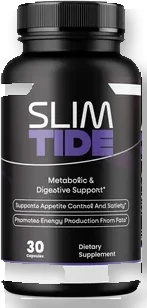
SlimTide is an adult formula and its own caution panel tells pregnant or nursing mothers to speak to a physician first. If you are planning ahead for after pregnancy, or shopping for someone else, the official store is where to check the current SlimTide price and what is actually in the box.
See the official storeGut health supplements during pregnancy: a label-reading checklist
If you are going to look at a product at all, look at it in this order. It takes about ninety seconds and it filters out most of the market.
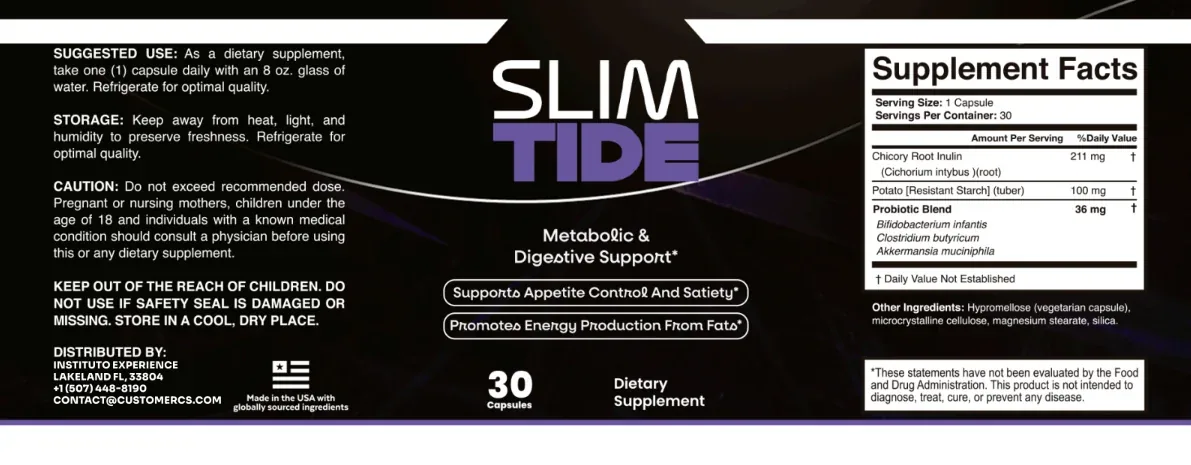
- Find the caution panel first, not the claims. Almost every reputable label carries a line naming pregnant or nursing mothers. Read it before anything else. On the SlimTide panel, for instance, that line appears above the ingredient table and names pregnant or nursing mothers, children under 18 and anyone with a known medical condition.
- Count the ingredients. Three named ingredients at disclosed doses are assessable. Nineteen ingredients in two proprietary blends are not.
- Look for strain designations, not just species. A probiotic listed as Lactobacillus rhamnosus tells you less than one listed with its full strain code. Strains within a species behave differently, and the safety and efficacy data attach to the strain.
- Check for a third-party testing mark. NSF, USP or an equivalent verifies that what is in the bottle matches the label. It does not verify that the ingredient is appropriate for you.
- Check what else you are already taking. Prenatal vitamins, iron, and any prescribed medication all belong in the same conversation.
What the evidence actually shows about probiotics in pregnancy
This is the part where honest reporting has to be a little disappointing. Probiotics have been studied in pregnancy for several outcomes, including glucose tolerance, group B streptococcus colonisation, maternal weight change and infant allergic disease. The findings are genuinely mixed. Some trials report a benefit, others report nothing, and pooled analyses tend to conclude that the effect is uncertain, strain-specific and dependent on the population studied. Where the strain, the dose or the timing differ between trials — which is nearly always — the results are not really comparable.
The safety picture is more settled than the efficacy picture. Well-characterised Lactobacillus and Bifidobacterium strains have a long record of use in food and have generally been well tolerated in healthy pregnant participants in the trials that have run. That is meaningfully different from saying they are proven safe, and it does not extend to novel organisms, spore-forming species or the newer next-generation strains that have only recently entered the consumer market with a thin human safety record behind them.
The safest working assumption in pregnancy is that an ingredient is unstudied until somebody shows you the study. For most of the digestive supplement aisle, nobody can — and a confident label is not a substitute for one.
How the categories compare on evidence strength
| Category | Typical form and dose | Strength of evidence in pregnancy | Sensible default |
|---|---|---|---|
| Dietary fibre from food | 25–30 g per day from meals | Strong general nutrition evidence; standard antenatal advice | Increase gradually, with fluid |
| Bulk-forming fibre (psyllium, ispaghula) | Sachets or capsules, several grams | Moderate; commonly discussed for constipation, not a stimulant | Ask your clinician first |
| Single-strain probiotic, disclosed strain | Capsule, strain-specific colony counts | Weak and inconsistent for most outcomes; tolerability generally good | Only with clinician agreement |
| Multi-strain synbiotic blends | Capsule, several organisms plus a prebiotic | Very limited pregnancy-specific data | Not while pregnant |
| Stimulant laxative herbs | Teas, “cleanse” capsules | Recognised concerns; not a pregnancy option | Avoid |
| Stimulant weight-loss formulas | Capsules, powders | Not appropriate; adulteration risk documented by regulators | Avoid |
Nothing in that table is a substitute for the judgement of the person managing your pregnancy, who knows your history, your medications and your bloods. It is a way of sorting the aisle, not a prescription.
Food covers most of this already, and costs nothing extra
The uncomfortable truth for the supplement industry is that the fibre question in pregnancy is a food question. A capsule delivering a few hundred milligrams of prebiotic fibre is not in the same conversation as a bowl of lentils delivering fifteen grams. If your daily fibre intake is well below the 25–30 g mark — and for most people it is — the meaningful change is on the plate. We have written a longer piece on where prebiotic fibre actually comes from in food, which covers the same fibres that supplements isolate and sell one at a time.
Practically, in pregnancy that means: oats and wholegrains at breakfast, legumes in at least one meal, fruit with the skin on where it is safe to do so, and the cooling trick with potato, rice and pasta that quietly increases resistant starch at no cost. Increase in small steps over two or three weeks rather than all at once, because a sudden fibre jump produces exactly the bloating and wind you were trying to fix. Fluid matters more than people expect — soluble fibre needs water to work, and adding fibre without adding fluid makes constipation worse rather than better.
If iron is the culprit, say so to your clinician rather than treating it with a purchase. There are formulations and dosing schedules that are easier on the gut, and that is a conversation, not a shopping decision.
What a supplement cannot do — the honest limits
This section exists because the rest of the internet tends to skip it.
- No dietary supplement diagnoses, treats, cures or prevents any disease. That is not a disclaimer written to be scrolled past; it is the actual regulatory status of every product discussed here.
- A probiotic will not prevent a pregnancy complication. Claims linking gut products to gestational diabetes, pre-eclampsia or preterm birth run far ahead of the evidence, and some of the trials in those areas found nothing at all.
- A capsule will not fix a low-fibre diet. The arithmetic is not close. Milligrams do not compete with grams.
- Nothing here replaces antenatal care. Persistent constipation, abdominal pain, bleeding or any sudden change belongs with your midwife or doctor the same day, not with a supplement.
- The absence of reported harm is not evidence of safety. It is frequently just evidence that nobody has looked.
If you are shopping anyway, shop like a sceptic
People search for the best gut health supplement while pregnant for understandable reasons, and telling them not to look has never worked. So look properly. Prefer brands that disclose every dose, name every strain in full, and publish a certificate of analysis. Treat a long ingredient list as a warning rather than a feature. Ignore before-and-after imagery entirely — it tells you about photography, not physiology. And when you compare the best gut health supplement brands against one another, compare the ingredient panels side by side rather than the marketing copy, because the panels are the only part of the page the manufacturer is legally accountable for.
Then take a photograph of that panel to your next appointment and let somebody with your notes in front of them make the call. If the answer is “wait until after the birth” — which it often will be — that is a perfectly good answer, and the product will still be there. For context on what a fibre-first formula looks like when it is aimed at non-pregnant adults, our SlimTide ingredient breakdown walks through the panel line by line, including where the doses are modest.
Common questions
Are gut health supplements during pregnancy safe?
For most products the honest answer is that safety has not been established either way, because pregnant women are routinely excluded from supplement trials. Single-strain probiotics from the Lactobacillus and Bifidobacterium groups have the largest body of use behind them and are generally well tolerated in healthy pregnancy, but the decision still belongs with your midwife or obstetrician, not with a label.
Which supplement ingredients should be avoided in pregnancy?
Stimulant laxative herbs such as senna, cascara sagrada, aloe latex and rhubarb root are the clearest ones to leave alone. Also avoid high-dose preformed vitamin A, herbal detox or cleanse blends, weight-loss formulas containing stimulants, and any product that hides its doses inside a proprietary blend.
Can fibre supplements help pregnancy constipation?
Bulk-forming fibre such as psyllium is one of the options clinicians discuss for constipation in pregnancy, alongside more fluid, more dietary fibre and gentle activity. It is not a stimulant laxative and works differently. Ask your own clinician before starting one, particularly if you are taking iron.
Is SlimTide suitable during pregnancy?
No. The SlimTide label states that pregnant or nursing mothers, children under 18 and anyone with a known medical condition should consult a physician before using this or any dietary supplement. It is formulated for non-pregnant adults and should not be treated as a pregnancy product.
References
- NIH Office of Dietary Supplements — Probiotics fact sheet for health professionals
- PubMed — published trials of probiotics in pregnancy
- Mayo Clinic — Prenatal vitamins: why they matter, how to choose
- Harvard T.H. Chan School of Public Health — Fiber
- NIDDK (NIH) — Constipation: definition, causes and management
General information, not medical advice. These statements have not been evaluated by the Food and Drug Administration, and no dietary supplement is intended to diagnose, treat, cure or prevent any disease. Speak to a qualified healthcare professional before changing what you take, and especially before taking anything while pregnant or nursing.
See the official SlimTide store
Affiliate link. Slimtidea Fibre Journal earns a commission on purchases made through it, at no extra cost to you. We are not the manufacturer. SlimTide is intended for adults and is not a pregnancy product.