How Appetite Suppressants Work: The Science of Hunger and Fullness
How does an appetite suppressant work?
An appetite suppressant works by turning down hunger signals or turning up fullness signals. Some fill the stomach with soluble fibre that swells with water, some slow how fast the stomach empties, and prescription versions act directly on brain and gut hormones such as GLP-1. The result is feeling satisfied on less food.
- Fibre-driven fullness — soluble fibre absorbs water and expands, so the stomach registers "full" on a smaller portion.
- Hormone signalling — ghrelin (hunger) falls while leptin, GLP-1 and PYY (fullness) rise after a satisfying meal.
- Slower emptying — food that leaves the stomach gradually keeps you satisfied for longer between meals.
Hunger is not a character flaw. It is a hormonal negotiation that runs whether you are paying attention or not, and willpower loses that negotiation more often than any diet book admits. That is the entire appeal of an appetite suppressant: instead of gritting your teeth through a growling stomach, you change the underlying signal so the growl never gets loud in the first place. But the same word is used for a cup of coffee, a spoon of fibre and a prescription injection, and understanding how each of them works is the difference between spending your money well and buying an expensive placebo.

What hunger actually is: ghrelin, leptin and the fullness hormones
Appetite is not a single dial. It is a conversation between your gut, your fat tissue and your brain, and it runs on chemistry rather than character. The headline hormone is ghrelin, produced mainly in the stomach. Ghrelin rises before meals and after a period without food, and its job is to tell the brain to go and find something to eat. When people skip meals to lose weight and then feel ravenous by mid-afternoon, that is ghrelin doing exactly what it evolved to do.
On the other side of the ledger sit the fullness signals. Leptin, released by fat cells, is the long-game hormone: it reports how much stored energy you are carrying and, over days and weeks, tempers appetite when reserves are high. In the short term, the gut releases GLP-1, PYY and cholecystokinin after a meal, and these produce the pleasant, done-eating feeling that tells you to put the fork down. Underneath all of it, blood sugar and insulin rise and fall, which is why a breakfast of white toast and jam leaves you hungry by ten while eggs and oats do not.
The uncomfortable truth is that this system is rigged to defend against weight loss, not to encourage it. Cut calories for a few weeks and ghrelin climbs while some fullness signals fade, which is the body quietly campaigning to get the weight back. That is precisely the gap a well-chosen appetite suppressant is meant to help close: not by overriding biology, but by nudging the fullness side of the conversation so a smaller intake feels less like a fight.
The four levers an appetite suppressant can pull
Strip away the marketing and there are only four mechanisms that any appetite suppressant, natural or pharmaceutical, actually uses. Everything on the shelf is some combination of these.
| Lever | What it does | Typical examples | Strength of effect |
|---|---|---|---|
| Stomach stretch | Physically fills volume so stretch receptors signal fullness | Soluble fibre, water, high-volume foods | Mild to moderate |
| Slower gastric emptying | Keeps food in the stomach longer, extending satiety | Soluble fibre, protein, fat | Mild to moderate |
| Satiety hormone signalling | Raises GLP-1 and PYY, blunts ghrelin | Protein, fermentable fibre, GLP-1 drugs | Mild for food; strong for drugs |
| Central nervous stimulation | Dampens hunger via the brain and adrenaline | Caffeine, prescription stimulants | Moderate, with trade-offs |
Notice what is missing from that list: there is no lever labelled "burns fat directly." An appetite suppressant changes how much you want to eat. Whether that translates into weight change depends on what happens at the table afterward. This is why the honest framing is always the same — a suppressant is a tool that makes a calorie deficit easier to hold, not a machine that melts fat while you carry on eating as before.
Fibre-driven fullness: the mechanism behind SlimTide
Of the four levers, the two that food can pull safely, day after day, are stomach stretch and slower emptying — and soluble fibre pulls both at once. When soluble fibre such as inulin or a viscous gel meets water in the stomach, it swells into a soft, bulky mass. That mass takes up volume, so the stretch receptors in the stomach wall fire sooner, and it thickens the stomach contents, so everything empties into the small intestine more gradually. You feel satisfied on a smaller plate and you stay satisfied longer between meals. No stimulant, no jitters, no racing heart.
There is a second, slower mechanism that fibre unlocks and stimulants never touch. When fermentable fibres such as resistant starch reach the large intestine, the bacteria living there ferment them into short-chain fatty acids. Those compounds are increasingly studied for their role in signalling fullness through the same gut-hormone pathways — GLP-1 and PYY — that the newest weight-loss drugs target pharmaceutically. Food does this gently and over time rather than dramatically, but it does it through your own biology rather than around it.
This is the exact logic the chicory root inulin and resistant starch in SlimTide are built on. Rather than leaning on caffeine or an undisclosed stimulant blend, the formula pairs a soluble prebiotic fibre with a resistant starch and three live bacterial strains, so it works on the stretch, the emptying and the fermentation levers together. It is an adults-only daily capsule, and it is honest about being a support for good eating rather than a substitute for it. If you want the mild, boring, sustainable end of the appetite spectrum, that is where fibre lives.

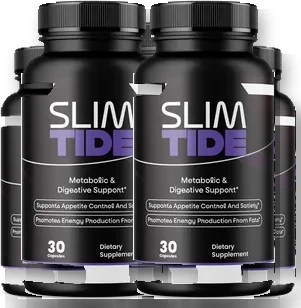
Want the gentle, fibre-first end of appetite control?
SlimTide is an adults-only daily capsule that pairs chicory root inulin and potato resistant starch with three live strains — no stimulants, no jitters. If you would rather work with your fullness hormones than force them, the official store has the current panel, the guarantee terms and the genuine product.
See the official storeSupplements versus prescription drugs: an honest comparison
Here is where a lot of online content quietly cheats. It describes the mechanism of prescription GLP-1 medicines — the ones producing headline results in clinical trials — and then implies a fibre capsule does the same thing. It does not, and pretending otherwise helps nobody. Prescription appetite drugs act directly and forcefully on the brain and gut hormone systems, at doses and with a precision that food cannot match. Their effect on appetite and weight is genuinely large, and so is their side-effect profile, their cost and the medical supervision they require.
Over-the-counter supplements sit at the mild end of the same spectrum. A soluble-fibre suppressant can meaningfully take the edge off hunger and make portion control easier, but the effect is measured in a slightly smaller plate and fewer between-meal raids on the biscuit tin, not in the double-digit body-weight changes seen with medication. Anyone selling you a supplement with drug-sized promises is selling the promise, not the product. The value of the fibre approach is not that it is stronger; it is that it is gentle, food-based, affordable and sustainable for months without a prescription.
Both ends of the spectrum have a place, and the sensible reader picks based on their situation rather than the loudest advert. We lay the two side by side in our guide to prescription versus natural weight loss, and if a specific ingredient is on your radar, our full berberine for weight loss guide looks at one of the more studied natural compounds in the same honest light.
Three myths worth clearing up
Before you spend anything, three ideas are worth putting straight, because each of them separates buyers from their money.
Myth one: an appetite suppressant burns fat. It does not. It reduces intake, and reduced intake is what changes weight. The distinction matters because it tells you what a suppressant can and cannot do on its own. Keep eating past fullness and no suppressant will help; use it to hold a modest, comfortable deficit and it earns its place.
Myth two: natural means it works instantly. Stimulants feel fast because you feel the buzz, but fibre works quietly and its fermentation benefits build over a couple of weeks as your gut bacteria adjust. If you judge a fibre product after three days you are judging the wrong window. Give it a fair four-to-six-week trial before deciding, and expect a little gas at first as things settle.
Myth three: more is better. Doubling the dose of soluble fibre does not double fullness; it mostly doubles the bloating. Every one of these mechanisms has a ceiling, and past it you get side effects instead of benefits. The label rate exists for a reason, and staying at it is not timidity, it is competence.
How to use an appetite suppressant well
The people who get real value from a suppressant treat it as one part of a plan rather than the whole plan. Take a fibre product with a full glass of water, ideally before or with a meal, so it can expand where it is meant to. Build protein into your meals, because protein is the most satiating macronutrient and the most powerful natural lever on the fullness hormones — a suppressant and a protein-forward plate reinforce each other. Sleep matters more than most people expect, because short sleep raises ghrelin and dulls the fullness signals, quietly undermining everything else you are doing.
And keep expectations calibrated. The realistic promise of the fibre approach is a quieter appetite, steadier energy between meals and less snacking on autopilot, which together make a sensible deficit easier to sustain over the months that actually matter. That is a modest, honest benefit — and modest, honest benefits, repeated for long enough, are the only thing that has ever moved the number on the scale and kept it there.

Common questions
How do appetite suppressants reduce hunger?
They work on one of two levers: the physical stretch of the stomach or the chemical messages your gut sends the brain. Soluble fibre absorbs water and expands, so the stomach registers fullness on a smaller volume of food. Protein and certain compounds slow gastric emptying and nudge satiety hormones such as GLP-1 and PYY upward while blunting the hunger hormone ghrelin. Prescription drugs act far more forcefully on those same hormone pathways than any supplement can.
What hormones control appetite?
Ghrelin is the main hunger hormone, rising before meals and telling the brain to seek food. Leptin, released by fat tissue, signals longer-term energy stores and dampens appetite over days and weeks. In the short term, GLP-1, PYY and cholecystokinin are released by the gut after eating and produce the feeling of being satisfied. Insulin and blood-sugar swings sit underneath all of this, which is why steady, fibre-rich meals leave you steadier than sugary ones.
Are appetite suppressants safe to use daily?
It depends entirely on the type. Fibre-based products such as inulin and resistant starch are foods and are generally well tolerated day after day, though they can cause gas and bloating until your gut adjusts. Stimulant-based suppressants are a different matter and are not designed for indefinite daily use, because tolerance builds and the cardiovascular load adds up. Prescription medicines are taken daily only under medical supervision. Always read the label and speak to a doctor if you take other medication.
Do appetite suppressants help you lose weight?
An appetite suppressant can help by making a calorie deficit easier to sustain, and a smaller intake is what actually drives weight change. But no supplement burns fat on its own, and the effect size for over-the-counter products is mild compared with prescription drugs. They work best as a support for balanced nutrition, adequate protein and regular movement, not as a replacement for any of them.
Related reading
References
- NIDDK (NIH) — How prescription weight-management medicines affect appetite
- NIH Office of Dietary Supplements — Dietary supplements for weight loss
- Harvard T.H. Chan School of Public Health — Fibre, satiety and fermentation
- PubMed — Ghrelin, leptin and appetite regulation
- PubMed — Soluble fibre, satiety and gastric emptying
General information, not medical advice. These statements have not been evaluated by the Food and Drug Administration, and no dietary supplement is intended to diagnose, treat, cure or prevent any disease. Speak to a qualified healthcare professional before starting any supplement, especially if you are pregnant, nursing, taking medication or managing a health condition.
See the official SlimTide store
Affiliate link. Slimtidea Fibre Journal earns a commission on purchases made through it, at no extra cost to you. We are not the manufacturer.