Over-the-Counter Weight Loss Pills: What Actually Works
Which over-the-counter weight loss pills actually work?
Over-the-counter weight loss pills work in three ways: they bind dietary fat, blunt appetite, or nudge metabolism. None match a prescription GLP-1, but a clinically dosed, third-party-tested product with a real money-back guarantee can support a calorie-aware diet. Fibre-based appetite support, like SlimTide, is a sensible, gentle starting point.
- Three real categories — fat binders, appetite suppressants and thermogenics each target a different reason people overeat.
- Read the dose, not the claim — individually listed, clinically studied amounts beat a mystery proprietary blend.
- Set the ceiling honestly — expect modest support, not the 14–17 percent losses seen with prescription medication.

Search volume for over the counter weight loss pills runs to more than twenty thousand queries a month, and almost all of it lands on the same disappointing thing: a ranked list ordered by commission, wrapped around a before-and-after photo that would embarrass a court. This page is the opposite. It explains what over-the-counter weight loss pills genuinely do, sorts the honest categories from the hype, sets a realistic ceiling on results, and shows you how to read a label so you can pick something worth the money — including where a fibre-first option like SlimTide reasonably fits.
The short version, stated up front: there is no magic pill on a shop shelf, and no over-the-counter product will do what a supervised prescription medication does. What a good one can do is make a sensible diet easier to stick to — and sticking to it is the part almost everyone fails at.
What “over the counter weight loss pills” actually means
The phrase covers two very different things sold in the same aisle. The first is a small number of genuinely regulated over-the-counter drugs — in the United States that essentially means one, a low-dose fat-blocker approved for weight management. The second, and by far the larger group, is dietary supplements: capsules, powders and gummies that are legal to sell without pre-market approval, provided they do not claim to treat a disease. Almost everything marketed to you as a “diet pill” belongs to that second group.
That distinction matters because it sets your expectations correctly. A supplement is not a stealth medication. It is a food-derived product working through comparatively gentle mechanisms — fullness, fat binding, a modest metabolic nudge — and it is regulated as food, not as a drug. The upside is easy access and, for well-made products, a good safety record. The downside is that the quality range is enormous, because nobody checked the bottle before it reached you. Everything else in this guide is about telling the good end of that range from the bad.
The three categories that actually do something
Strip away the branding and almost every credible over-the-counter option belongs to one of three groups. Each has a plausible mechanism and at least some human evidence. What separates a serious product from a gimmick is whether it uses one of these mechanisms at a real dose, or dresses up something else to look like it does.
| Category | How it is meant to work | Typical ingredients | Honest read |
|---|---|---|---|
| Fat binders | Bind some dietary fat in the gut so it passes through undigested | Chitosan, certain fibre complexes; the OTC drug orlistat is the regulated version | Modest effect; works only alongside a lower-fat diet, and the drug version has predictable digestive side effects |
| Appetite suppressants | Increase fullness or slow stomach emptying so you eat less without white-knuckling it | Glucomannan, inulin, resistant starch and other viscous fibres | The most sensible category for most people, because portion size is the usual problem; effect is gradual, not dramatic |
| Thermogenics | Slightly raise energy expenditure and fat oxidation | Green tea catechins, caffeine, capsaicin | Real but small; stimulant load is the catch, and tolerance builds. Not for anyone caffeine-sensitive |
Notice what is missing from that table: “fat burners” built on exotic single extracts with a five-figure marketing budget and a one-study evidence base. Raspberry ketones, garcinia, forskolin and their cousins cycle through the market every couple of years, ride a talk-show mention, and quietly disappear when the follow-up trials fail to replicate. If a product's entire pitch rests on one ingredient you had never heard of last year, that is a marketing category, not a mechanism.
Of the three real groups, appetite support is the one that fits the most people, because the most common reason a diet fails is not a sluggish metabolism — it is hunger at nine o'clock at night. Viscous fibres such as inulin and resistant starch draw in water and slow gastric emptying, which is a genuinely researched route to eating a little less at the next meal. That is the category SlimTide sits in, and it is worth understanding why before you compare it with anything.
The honest ceiling: no OTC pill matches a prescription GLP-1
This is the sentence most sales pages will not print. The prescription GLP-1 medications that have reshaped weight management — semaglutide, tirzepatide and their relatives — produce average losses in clinical trials in the region of fourteen to seventeen percent of body weight, under medical supervision, at a cost and with a side-effect profile to match. Nothing you can buy without a prescription is in that league, and any supplement implying otherwise is lying to you.
Setting that ceiling is not a reason to skip over-the-counter options; it is a reason to use them for what they are. A well-made supplement supports the behavioural side of weight management — smaller portions, fewer impulse snacks, a diet you can actually maintain — and for many people that support is the difference between a plan that lasts three weeks and one that lasts three months. If you want to understand exactly how the two approaches compare on results, cost, access and side effects, our full breakdown of prescription versus natural weight loss lays them side by side without pretending they are equals.
Want a gentle, fibre-first place to start?
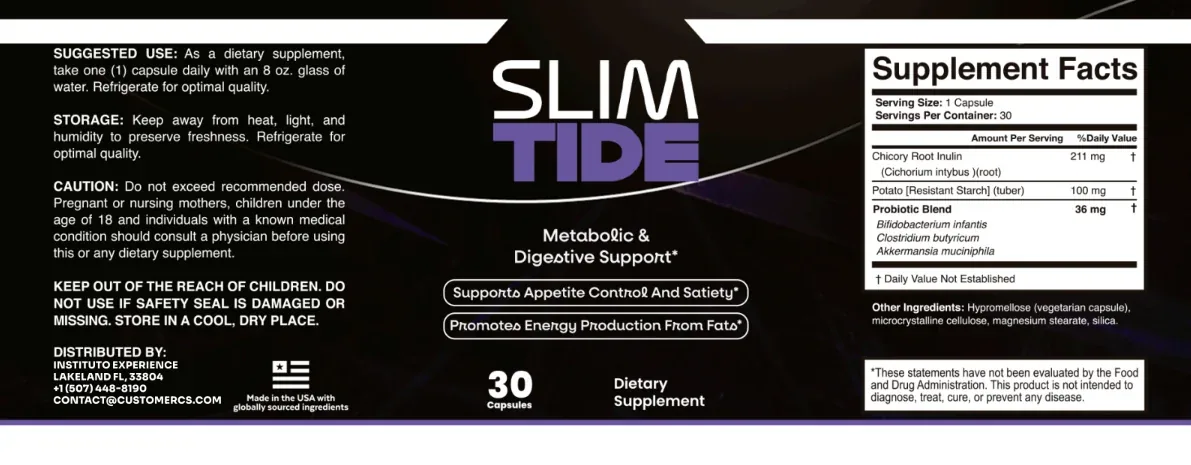
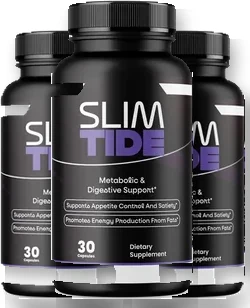
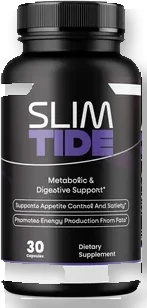
SlimTide is an adults-only daily capsule that pairs chicory root inulin and potato resistant starch with three named probiotic strains to support appetite control and portion size. Every ingredient is listed with its own dose, it is made in a GMP-registered facility, and it is backed by a 60-day money-back guarantee.
See the official SlimTide storeSafety flags: what to avoid on the label
Because supplements are not vetted before sale, the responsibility for spotting a bad one falls on you. Fortunately the warning signs are consistent, and once you know them the worst products give themselves away in seconds. Treat any of the following as a reason to put the bottle back down.
- Proprietary blends. If the label lists a “blend” with one total milligram figure instead of a dose for each ingredient, you cannot tell whether the useful component is present at a researched amount or a fairy dusting. This is the single most common trick in the category.
- Stacked stimulants. Caffeine plus other stimulant sources plus a “metabolism” herb is how you end up jittery, sleepless and with a racing heart. A little caffeine is fine for most people; three overlapping sources you cannot quantify is not.
- Exotic single-ingredient miracles. The one-extract wonder with a talk-show pedigree and no dose transparency. If the whole product is a story about a berry, walk away.
- No third-party testing. Independent testing for identity, potency and contaminants is the only outside check that what is in the bottle matches the label. Its absence is not proof of a problem, but its presence is a real signal of quality.
- No real guarantee. A genuine money-back guarantee is a company betting its own money that the product does something for you. “No refunds” on a weight-loss supplement tells you what the seller privately expects.
- Disease claims. Any supplement claiming to treat, cure or prevent obesity, diabetes or anything else is breaking the rules it is sold under, which tells you how much it respects the other rules too.
Interactions deserve a line of their own. Fibre products can affect how and when other medications are absorbed, and stimulant-based products interact with blood-pressure and heart medicines. If you take anything regularly, a two-minute conversation with a pharmacist before you start is the cheapest insurance you will ever buy. We go deeper on tolerability in our guide to weight loss supplement side effects and how to avoid them.
What to look for: clinically dosed, tested, guaranteed
Flip every warning sign over and you have a checklist for a product worth buying. The best over-the-counter weight loss pills share a short list of unglamorous traits, and none of them involve the words on the front of the bottle.
- Individually dosed ingredients you can look up against published research, not a blend total.
- A plausible, single mechanism matched to your actual problem — appetite, dietary fat, or energy expenditure — rather than a scattergun of nine things.
- Third-party testing for identity, potency and purity, ideally with the certificate available on request.
- Manufacturing you can verify — a GMP-registered facility is the baseline, not a bonus.
- A real money-back guarantee long enough to actually judge the product, since nothing in this category works in a fortnight.
- Honest marketing that names the diet-and-movement side instead of pretending the capsule does the work alone.

Where SlimTide fits in the over-the-counter picture
SlimTide is not a stimulant fat-burner and does not pretend to be one. It is a synbiotic: two prebiotic fibres — chicory root inulin and potato resistant starch — paired with three named probiotic strains, Bifidobacterium infantis, Clostridium butyricum and Akkermansia muciniphila. The fibres are the appetite-support mechanism from the honest middle column of our category table; the strains are there to feed on that fibre in the gut. It is one capsule a day, taken with a glass of water in the morning before a meal.
What makes it a reasonable pick against the checklist above is not a bold promise — it is the boring stuff. Every ingredient is listed with its own dose rather than buried in a blend, the capsule is a vegetarian hypromellose shell in a GMP-registered facility, and the whole thing carries a 60-day money-back guarantee. That combination puts it on the right side of every safety flag in this article. Whether it is the right product for you comes down to whether your problem is appetite and portion size, which for most people it is. If you want the detail before you decide, our hands-on SlimTide review of whether it really works covers ingredients, realistic results and who it suits.
None of this makes it a prescription substitute, and we would lose your trust if we said so. It is a sensible, gentle, transparent starting point in a category full of the opposite — and for someone who wants to eat a little less without white-knuckling every evening, that is a fair place to begin.
Related reading
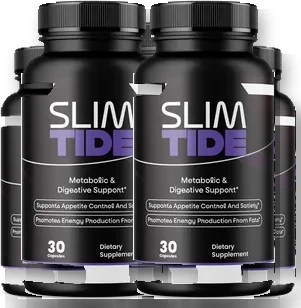
The best weight loss pills of 2026, ranked and reviewed
How this year's most-searched diet pills actually compare on evidence, dosing and value.

Prescription vs natural weight loss, honestly compared
GLP-1 drugs against natural supplements on results, cost, access and side effects.
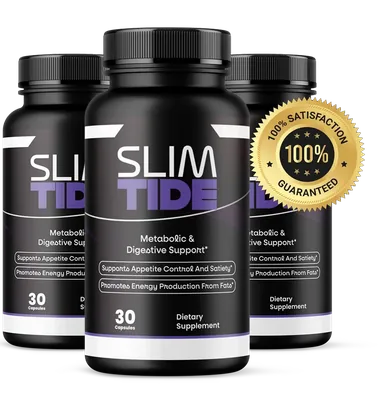
SlimTide reviews: does it really work?
Ingredients, how it supports appetite control, realistic results and who it suits.
Where to buy SlimTide safely at the best price
Official store, guarantee terms and how to avoid counterfeit listings.
Common questions
What is the best over-the-counter weight loss pill?
There is no single best over-the-counter weight loss pill, because the right one depends on why you overeat. If your problem is portion size and constant snacking, a fibre-based appetite-support product such as SlimTide is a rational starting point. If the issue is dietary fat, a fat binder targets a different mechanism. The best product for anyone is one that is clinically dosed, third-party tested, transparent about its label and backed by a genuine money-back guarantee, rather than whichever brand shouts loudest.
Are OTC weight loss pills safe?
Many are reasonably safe when used as directed, but the category is uneven because dietary supplements are not pre-approved before sale. The safest products name every ingredient with an individual dose, avoid undisclosed proprietary blends and heavy stimulant loads, and are made in a GMP-registered facility. The riskiest carry stacked stimulants, exotic unstudied extracts or ingredients that have previously been pulled from the market. Always check with a pharmacist or doctor first if you take medication, are pregnant or nursing, or manage a health condition.
Do you need a prescription for effective weight loss pills?
No over-the-counter pill matches the results of prescription GLP-1 medications such as semaglutide or tirzepatide, which can produce average losses in the region of 14 to 17 percent of body weight in trials. If you want that scale of result, you need a prescription and medical supervision. Over-the-counter options work at a gentler, more modest level and suit people who want to support portion control and a calorie-aware diet rather than replace one. They are a starting point, not an equivalent.
What ingredients should OTC diet pills contain?
Look for ingredients with a plausible mechanism and a stated dose you can check against published research: viscous fibres such as inulin and resistant starch for fullness, glucomannan for appetite, and well-studied thermogenic support like green tea catechins and caffeine if you tolerate stimulants. Avoid proprietary blends that hide the amount of each ingredient, mega-dose stimulant stacks, and anything promising results without any dietary change. A short, honest, individually dosed panel beats a long mysterious one every time.
References
General information, not medical advice. These statements have not been evaluated by the Food and Drug Administration, and no dietary supplement is intended to diagnose, treat, cure or prevent any disease. Weight loss depends on diet, activity and individual factors, and results vary. Speak to a qualified healthcare professional before starting any supplement, especially if you are pregnant, nursing, taking medication or managing a health condition.
See the official SlimTide store
Affiliate link. Slimtidea Fibre Journal earns a commission on purchases made through it, at no extra cost to you. We are not the manufacturer.